Facial Redness and Rosacea: What Triggers It and What Actually Helps
Posted on 7/23/2026 by The Facial Center |
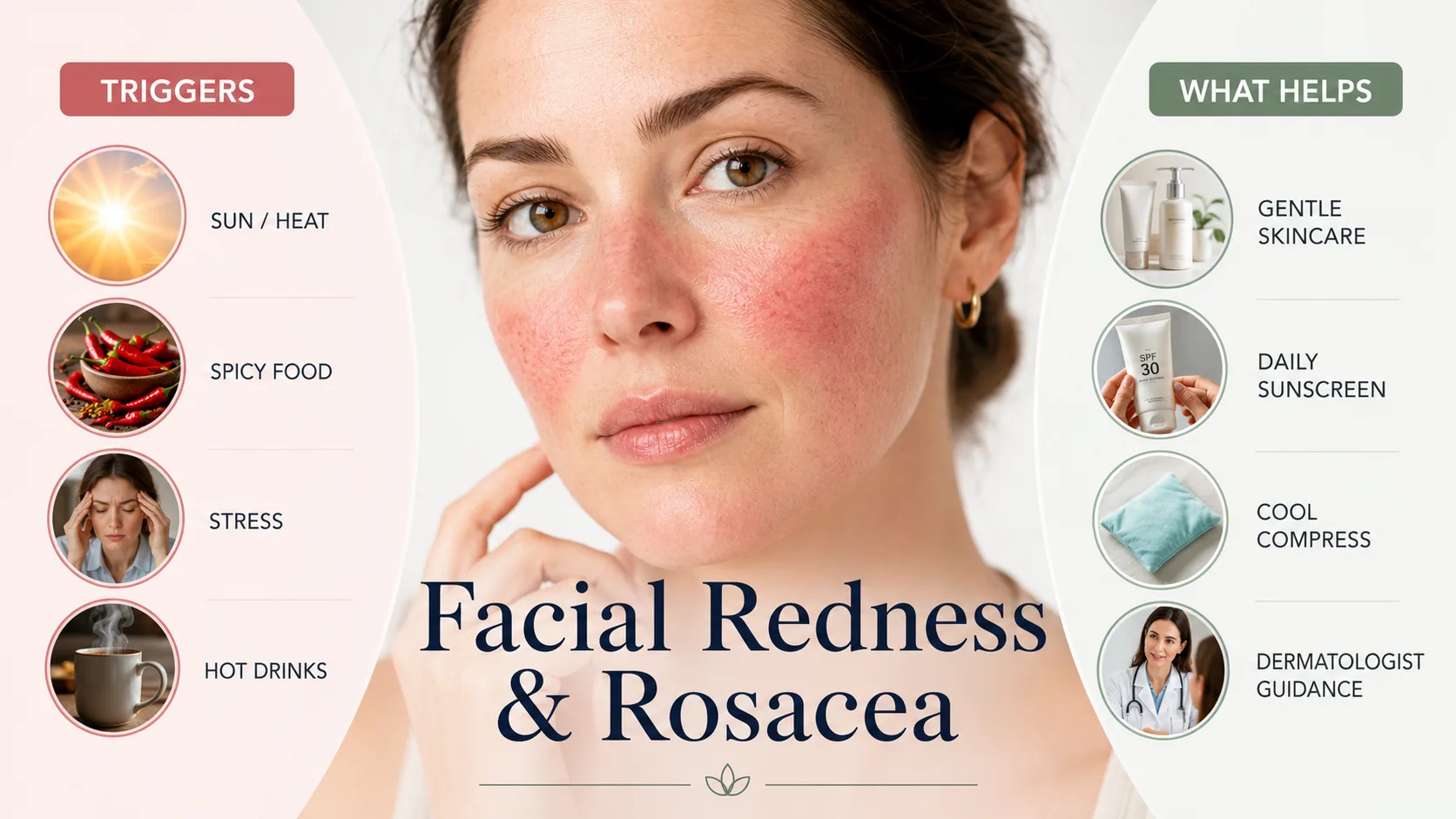 Facial redness that lingers long after the trigger is gone is one of the most common concerns we hear about at our Charleston, WV office. If your cheeks flush at the first hint of heat, a glass of wine, or a stressful afternoon, and the color takes hours to settle rather than minutes, you may be dealing with rosacea rather than ordinary sensitivity. Facial redness that lingers long after the trigger is gone is one of the most common concerns we hear about at our Charleston, WV office. If your cheeks flush at the first hint of heat, a glass of wine, or a stressful afternoon, and the color takes hours to settle rather than minutes, you may be dealing with rosacea rather than ordinary sensitivity.
Rosacea is frustrating precisely because it doesn’t behave like other skin concerns. It isn’t something you caused, it isn’t a hygiene problem, and it rarely responds to the products marketed at it. This guide covers what rosacea actually is, what sets it off, why most routines fall short, and which in-office options are worth considering once redness has become a daily fact of life.
On This Page
What Rosacea Actually Is (and What It Isn’t)
Rosacea is a chronic inflammatory condition that affects the central face: the cheeks, nose, chin, and forehead. At its core, it’s a problem of blood vessels behaving badly. In rosacea-prone skin, the small vessels near the surface dilate far too easily and are slow to constrict again. What starts as occasional flushing gradually becomes a background redness that never fully clears, and over time some of those vessels stay permanently widened and visible at the surface.
Rosacea doesn’t look the same on everyone. Some people mostly flush. Others carry a constant ruddy tone across the cheeks and nose. Some develop small bumps and pustules that look convincingly like acne. A smaller number experience thickening of the skin, most often on the nose. Many people notice their eyes feel gritty, dry, or irritated alongside the skin changes. These presentations overlap, and they can shift over the years.
Here’s what rosacea is not. It isn’t acne, even when it produces bumps; the two conditions have different causes and respond to different treatments, which is why acne products so often make rosacea worse. It isn’t caused by poor hygiene or by anything you did wrong. It isn’t simply “sensitive skin,” though the two frequently travel together. And despite the folklore, it isn’t caused by drinking; alcohol can trigger a flare, but it doesn’t create the underlying condition.
One more thing worth saying plainly: not all facial redness is rosacea. Seborrheic dermatitis, contact irritation from a product, and cumulative sun damage can all look similar, and a few less common conditions can too. That’s the practical reason a proper evaluation matters before you start treating. Getting the diagnosis right determines whether the plan works.
Rosacea also has no cure. That sounds discouraging, but it’s the honest starting point, and it reframes the goal usefully. The aim isn’t elimination; it’s control. Fewer flares, shorter flares, and a calmer baseline are all realistic, and for most people that adds up to a meaningful difference in how their skin looks and feels day to day.
What Sets It Off
Rosacea flares in response to things that make blood vessels dilate. Once you understand that single mechanism, the trigger list stops looking random.
Sun exposure is the most commonly reported trigger, and it’s the one worth taking most seriously because it does long-term damage to vessel walls on top of causing an immediate flush. Heat of any kind follows closely: hot showers, saunas, sitting near a fire, a warm kitchen. Rapid temperature swings are their own category; walking from a cold parking lot into a heated building can set off a flare that has nothing to do with either temperature on its own.
Alcohol is a frequent trigger, with red wine reported more often than other drinks. Spicy food and hot beverages act on the same pathway; for many people the temperature of the coffee matters more than the caffeine in it. Emotional stress is a genuine physiological trigger, not a soft one. Exercise raises core temperature and reliably produces flushing, though this is manageable rather than a reason to stop. Wind and cold, dry air irritate the skin barrier and drive flares in winter as much as heat does in summer.
Skincare and cosmetic products deserve their own mention, because they’re the trigger people most often miss. Alcohol-based toners, fragrance, menthol, camphor, witch hazel, and physical scrubs are common culprits sitting in bathroom cabinets right now.
Finding Your Triggers
Trigger lists are individual. Two people with the same diagnosis can have almost no overlap. Red wine might be someone’s worst offender while another person drinks it with no reaction but flares from a hot shower.
This is why a trigger diary is genuinely worth the two weeks it takes. Note what you ate, drank, applied, and did, alongside the weather and your stress level, and mark the days your skin flared. Patterns surface faster than most people expect, and the resulting list is far more useful than any generic one, including this one. Bring it to your consultation.
Why Redness Doesn’t Respond to Ordinary Skincare
This is the part that frustrates people most, and it deserves a straight answer.
Most skincare works at the surface of the skin. Rosacea’s redness is vascular, which means it originates in blood vessels sitting below the surface. A cream applied on top can soothe irritation, support a damaged barrier, and reduce the reactivity that leads to flushing, and those are real benefits. What it cannot do is reach a dilated vessel and close it. When a vessel has been permanently widened long enough to be visible as a fine red line across your cheek or around your nose, no topical product will remove it. That vessel is a structural change, and it needs a treatment that works structurally.
There’s a second problem. A great many products marketed for redness contain ingredients that irritate rosacea-prone skin, and irritation causes flushing, which causes more redness. People end up on a treadmill: the redness product provokes a flare, the flare seems to prove the redness needs treating, so the product gets used more. Aggressive exfoliation belongs in this category too. Scrubs and strong acids strip a barrier that is already compromised, and a compromised barrier is more reactive, not less.
Color-correcting makeup is worth naming honestly. Green-tinted primers work, and they can be genuinely useful on a given morning. They also cover rather than treat, and they do nothing about what happens tomorrow.
None of this means skincare is pointless. A gentle, well-chosen routine is the foundation everything else is built on, and we’ll get to what that looks like. It simply means skincare has a ceiling, and if you’ve been diligent for months and plateaued, you’ve most likely found it. That plateau isn’t a failure of effort. It’s the point at which the tool stops matching the problem.
In-Office Options at The Facial Center
When redness has become persistent or vessels are visible, in-office treatment is what moves the needle. Two options at our practice are built for exactly this.
Nordlys Laser for Persistent Redness and Visible Vessels
The Nordlys laser is a light-based system, and it addresses redness in a way topicals structurally can’t.
The principle is targeted heating. The system delivers light in wavelengths that hemoglobin absorbs strongly. When that light passes into the skin, the blood inside a dilated vessel absorbs it and converts it to heat, which damages the vessel wall from within. Your body then clears the treated vessel over the following weeks, and the redness it was contributing fades with it. Because hemoglobin absorbs the light far more readily than the surrounding skin does, the vessel takes the energy and the tissue around it largely doesn’t.
In practice, this suits two things well: the diffuse background redness across the cheeks and nose that never quite clears, and the discrete visible vessels that skincare has never touched. Most patients describe the sensation as a quick snap with a flash of warmth, and there’s typically some redness or mild warmth afterward that settles over a day or two.
Results build over a series rather than arriving in one visit, and the number of sessions depends on how much vessel involvement you have and how your skin responds. Your provider will map that out at your consultation instead of guessing. Sun exposure before and after treatment matters here, so timing your series around your summer is a conversation worth having.
Gentle Facial Protocols for Reactive Skin
A standard facial is often too much for rosacea-prone skin. Steam, aggressive extraction, and vigorous exfoliation all provoke exactly the response you’re trying to avoid, which is why some people conclude facials aren’t for them.
Our facials for sensitive and rosacea-prone skin are built differently from the ground up. Heat is minimized, exfoliation is dialed back or dropped, and the products are selected to calm and rebuild the barrier rather than resurface. The goal isn’t dramatic; it’s a stronger, less reactive barrier that flares less easily. That work pairs well with laser treatment, because calmer skin tolerates a series better.
If you’re unsure which of our facial treatments fits your skin, that’s a reasonable thing to sort out in a consultation rather than by trial and error on your own face.
Building a Routine That Doesn’t Trigger Flares
The best routine for rosacea-prone skin is shorter than most people want it to be. Every product is a chance to introduce an irritant, so fewer, better-chosen steps beat an elaborate regimen almost every time.
Cleanse gently, once or twice a day, with lukewarm water rather than hot. Skip anything that foams aggressively, and use your hands rather than a cloth or brush. Follow with a simple moisturizer that supports the barrier; ceramides and niacinamide are generally well tolerated and worth looking for on the label.
Wear sunscreen every day, including in winter and on overcast days. Given that sun is the most commonly reported trigger, this is the single highest-value habit on the list. Mineral formulas built on zinc oxide or titanium dioxide tend to suit reactive skin better than chemical filters.
Read labels and avoid the usual provocateurs: denatured alcohol, added fragrance, menthol, camphor, eucalyptus, witch hazel, and scrubs with abrasive particles. Introduce anything new one product at a time, and patch test on your jawline for several days before it goes near your cheeks. If a product stings, that isn’t it working. Stop.
Then be patient with it. Barrier repair takes weeks, not days, and the payoff is a baseline that’s harder to set off.
Book Your Consultation
If facial redness has stopped responding to anything you try at home, a consultation is the fastest way to find out what’s actually driving it and what will help. Your provider will evaluate your skin, talk through your triggers and history, and build a plan around what your skin is actually doing rather than a generic protocol. The Facial Center treats facial redness at our Charleston and Hurricane offices. Call us at 304-205-6123 or click here to schedule your appointment.
Frequently Asked Questions
Can rosacea be cured?
No, rosacea is a chronic condition and there is no cure for it. It can, however, be managed well. Most people are able to reduce how often they flare, how long flares last, and how red their skin looks at baseline through a combination of trigger management, a gentle routine, and in-office treatment. The realistic goal is lasting control rather than elimination.
Will the visible vessels on my cheeks go away on their own?
Generally not. Once a small vessel has become permanently dilated and visible at the surface, it tends to stay that way and often becomes more noticeable over time, particularly with ongoing sun exposure. Topical products cannot close a vessel. Light-based treatment is the usual approach for visible vessels because it works on the vessel itself rather than the skin above it.
Does laser treatment for facial redness hurt?
Most patients describe it as a brief snapping sensation with a flash of warmth, and find it very manageable. Discomfort varies with the area being treated and how much vessel involvement is present. Afterward you can expect some redness and mild warmth that typically settles within a day or two. Your provider will walk you through what to expect for your specific plan.
How many treatments will I need for facial redness?
Results build across a series rather than appearing after a single session, but the number depends on how much redness and vessel involvement you have and how your skin responds along the way. Rather than quote a figure that may not apply to you, we assess your skin at your consultation and map out a realistic plan from there. Maintenance sessions are common, since rosacea is ongoing.
Can I still get facials if I have rosacea?
Yes, provided the protocol is adjusted for reactive skin. Standard facials often involve steam, extraction, and exfoliation that can provoke a flare, which is why some people with rosacea give up on them. Our facials for sensitive and rosacea-prone skin minimize heat, reduce or skip exfoliation, and focus on calming the skin and supporting the barrier instead.
Is my facial redness definitely rosacea?
Not necessarily. Several other conditions produce similar redness, including seborrheic dermatitis, irritation from a skincare product, and long-term sun damage. Because these respond to different approaches, treating the wrong one wastes time and can make things worse. An in-person evaluation is the right first step before starting any treatment plan.
Where can I get treatment for facial redness in the Charleston, WV area?
The Facial Center offers Nordlys laser treatment for persistent redness and visible vessels, along with facials designed for sensitive and rosacea-prone skin, at both our Charleston and Hurricane offices. Our providers will evaluate your skin and recommend the approach that fits it.
|
|